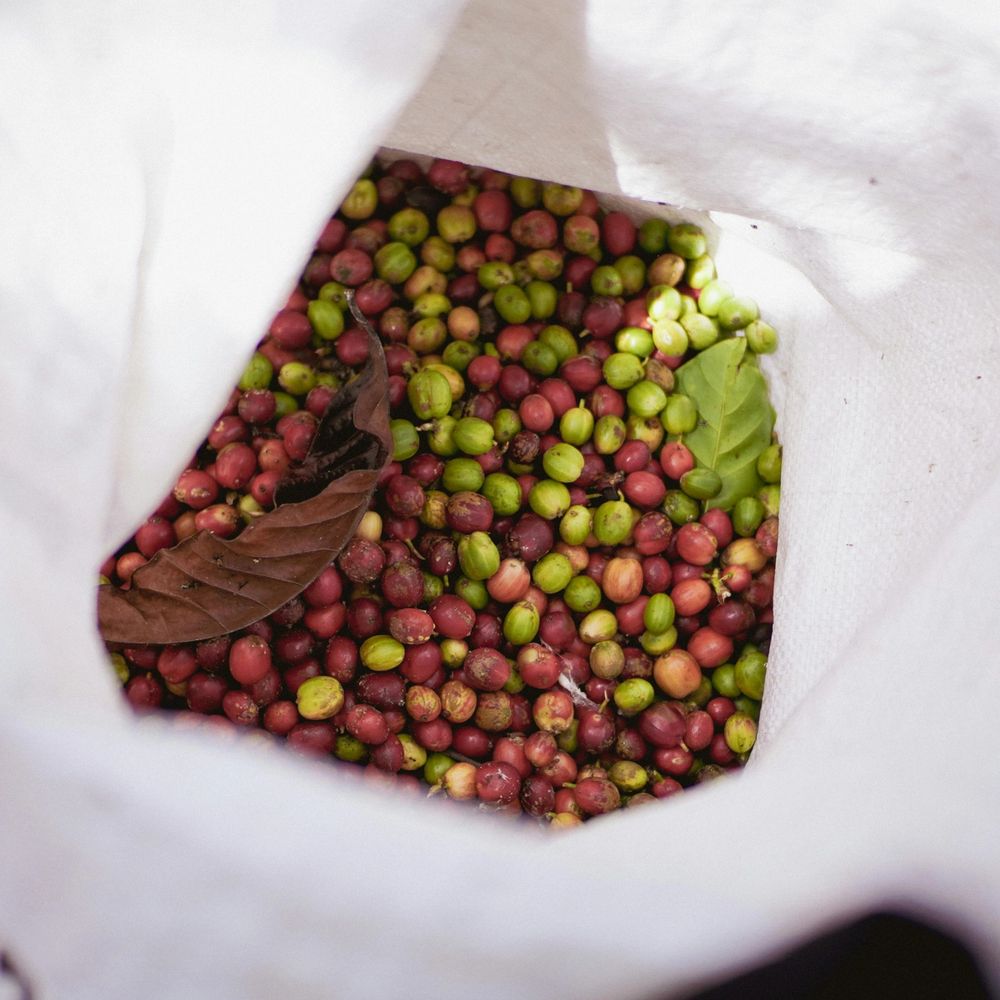
While much of the conversation around coffee quality control focuses on flavour and cup scores, there is a far more immediate and expensive threat hiding in your burlap sacks. Coffee is an agricultural product often dried outdoors on concrete patios or raised beds. Because of this, it is incredibly common for foreign objects to make their way into bulk green coffee shipments.
If these objects make it through your production line, they threaten to cause catastrophic damage to your most expensive roastery equipment.
The Limitations of Traditional Destoners
Almost every commercial roastery utilises a destoner to catch heavy objects after the roasting process. Destoners operate on the principle of density. They use a powerful vacuum to lift the lighter roasted coffee beans into a collection bin, leaving heavier objects like large stones or metals behind.
However, density sorting has a major blind spot. Over time, coffee producers have adopted various drying and processing methods, and the debris swept up with the coffee varies wildly. A small piece of dried concrete, a piece of hard plastic, a twig, or a porous patio stone can easily have the exact same density as a roasted coffee bean. When the density matches, the traditional destoner will simply lift the debris right along with the coffee.
The Cost of a Broken Burr Set
When foreign debris bypasses the destoner, it inevitably ends up in a grinder. Whether it is your own commercial grinder used for wholesale batch orders or a high end grinder at one of your partner cafes, the result is the same.
A single piece of concrete can shatter a commercial burr set instantly. Replacing the burrs on an industrial grinder can cost a lot of money, not to mention the hidden costs of operational downtime, delayed wholesale deliveries, and the sheer frustration of your cafe clients. Relying solely on a destoner is a massive financial risk.
AI and Shape Based Defect Detection
To truly protect your equipment and your wholesale clients, visual analysis is required. This is where modern automated sorting transcends basic colour checking.
Advanced coffee analysers utilise high definition cameras and artificial intelligence to look at the physical geometry of every single item passing through the machine. Because these cameras offer optical accuracy down to 0.1mm, the AI can instantly recognise that a small grey object does not share the organic shape of a coffee bean. Even if the stone is the exact same colour and density as a dark roast, the machine will identify the structural anomaly and eject it safely. This provides an essential secondary layer of security that density alone simply cannot match.